Highlights from the HiPPP EMR-C and EPOCH-Connect annual conference, 17-18 November, Melbourne 2025
Ms Heilok Cheng, PhD Candidate at the University of Sydney and EPOCH-Translate ECR, shares her reflections and highlights the work of EPOCH-Translate members at the recent HiPPP EMR-C & EPOCH-Connect annual conference.
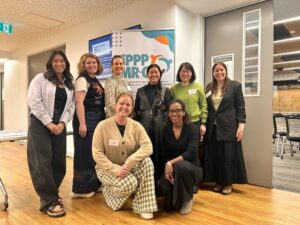
Left to right, back row: Ms Chloe Tran; Dr Jessica Appleton; Dr Briony Hill; Ms Heilok Cheng; Dr Konsita Kuswara; Dr Ioanna Katiforis; front row: Dr Dimity Dutch, Ms Haimanot Hailu.
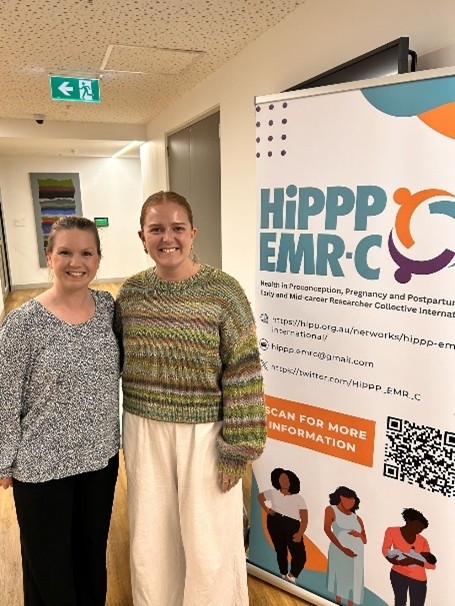
The Early Promotion of Optimal CHild Growth (EPOCH) – Connect community of practice joined the Health in Preconception, Pregnancy, and Postpartum Early and Mid-career Researcher Collective International (HIPPP EMR-C International) this year in a combined collaborative annual research conference, held on 17 and 18 November 2025, at the Monash University School of Public Health and Preventive Medicine.
Dr Konsita Kuswara and Dr Jessica Appleton represented EPOCH-Connect in the conference executive team, with many EPOCH-Connect members in the organising committee and Dr Sarah Taki as a discussion panellist on consumer experiences in research. The conference theme, Unified Frontiers in Parental and Early Childhood Health: Integrating Consumer and Community Involvement, highlighted research that demonstrated or informed collaboration with a broad range of public contributors, particularly community members who use health care services across preconception, pregnancy, postpartum, and early childhood.
CRE EPOCH-Connect researchers presented their latest work around consumer experiences and engagement to improve health in early childhood:
Using parent-centred perspectives to understand overweight, obesity and tooth decay in early childhood – findings from a qualitative systematic review (Ms Heilok Cheng, PhD candidate). Heilok focused on parents’ lived experiences to understand how they viewed healthy weight and teeth, and their needs on supporting this. Read more.
Caregiver acceptability and feasibility of child health behaviour screening in Primary Health Care: A multi-method pilot study (Dr Dimity Dutch). Dimity shared caregivers’ views of a brief child health behaviour screening tool on dietary intake, physical activity, sedentary behaviour and sleep, which may be used to guide health promotion conversations in primary health care
centres.
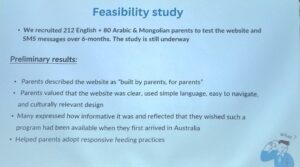 Developing and evaluating an interactive web-based Healthy Beginnings program while integrating health literacy and cultural considerations for promoting health behaviours in the first year of life (Mrs Danielle Jawad, PhD candidate). Danielle provided a broad overview of developing the Healthy Beginnings web-based platform with Arabic- and Mongolian-speaking families, including how the lived experiences of families was used to inform co-design, website design, and testing.
Navigating Infant Feeding in the Context of Household Food Insecurity: A Qualitative Study of New Zealand Mothers (Dr Ioanna Katiforis). Ioanna presented mothers’ experiences of complementary feeding for infants when food insecurity was experienced, including key findings on how this was prioritised or support was sought when resources were stretched. Read more.
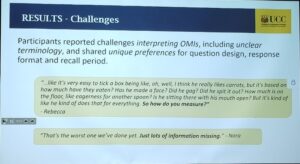 The importance of authentic caregiver involvement in child health research methods. Dr Dimity Dutch (on behalf of Ms Moira Duffy). Dimity shared experiences of the SCOPE team in working with mothers on how they understand measurement tools on child feeding – and what this might mean for data collection with parents in childhood obesity research.
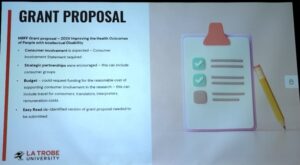
Other notable presentations on consumer engagement came from keynote speakers Ms Rebecca Hyde, Dr Charlie Benzie and Dr Bec Jenkinson, who shared a range of experiences in working with women in pregnancy and parenthood. Key points from these talks included:
- How research design and methods can meaningful change with consumer involvement, such as contacting and redesigning data collection to be sensitive and suitable for families who have experienced neo-natal loss
- Consumer engagement spanning across projects, such as findings on how COVID19 lockdowns affected telehealth for pregnancy care informing a trial on how routine pregnancy care can be supported with telehealth, with consumers staying involved as associate investigators and consumer board advisors
- Understanding how the research valley of death (the 17 years between science research to be translated to practice) might be shortened through consumer and community involvement – particularly, Dr Bec Jenkinson’s work with consumer advocates and Queensland Health implemented the Partnering with the woman who declines recommended maternity care resources and changed practices on Thursday Island to support women birthing in community
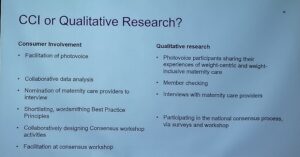
- The difference between consumer and community involvement and qualitative research – some processes will overlap, but qualitative research is about data collection, and involvement is about how consumers shape the research
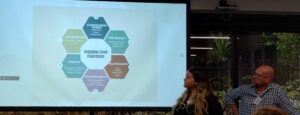 Ms Ahlia Griffiths and A/Prof Tim Moss, from the Valued Individuals Living and Learning About Growing Equity (VILLAGE) national network of parents and carers led a workshop on engaging lived experience experts. Notable messages from this workshop included:
- Consumers add a perspective that will typically not be addressed in research publications – and these are as valuable and necessary as a systematic review… and hopefully, will one day be as ubiquitous!
- Creating comfortable spaces removed from positionality and power – everyone is a contributor and a person, not a title, a role, a project (for researchers) or a sum of negative experiences (for lived experience experts)
- Understanding the need for researchers to be uncomfortable with confronting someone else’s negative experiences that other health systems or professionals have created – lived experience experts will be permanently living with those feelings, and they are asking you to create space that makes sharing difficult feelings possible in order to improve health services and care
- The many pragmatic and flexible approaches for lived experience experts to be involved as consumer advocates, including options for renumeration, authorship, involvement and acknowledgement; choosing different ways to be engaged; and contributing as much or as little as suitable (particularly for parents who need a parenting break!)
These new connections and insights on consumer, community member, and lived experience expert engagement will support fostering collaborations in prevention research for pregnancy and early childhood. For more information on the above presentations, please email the researchers directly.
Thank you to HiPPP EMR-C, EPOCH-Translate and EPOCH-Connect members in the organisation committee (Jessica Appleton, Konsita Kuswara, Cynthia Smith, Heilok Cheng, Abhigale D’Cruz, Dimity Dutch, Eve House, Ioanna Katiforis), Sarah Taki in the consumer engagement discussion panel, Danielle Jawad and Chitra Tulpule as session chairs.