Highlights from International Society of Behavioral Nutrition and Physical Activity (ISBNPA) 2026 in Cadiz, Spain
Heilok Cheng, PhD candidate at The University of Sydney and EPOCH-Translate ECR, reflects on her experience attending ISBNPA 2026.
The International Society of Behavioral Nutrition and Physical Activity Conference was held in Cadiz, Spain, from the 27th to 30th of May 2026, and was attended by delegates from around the world.
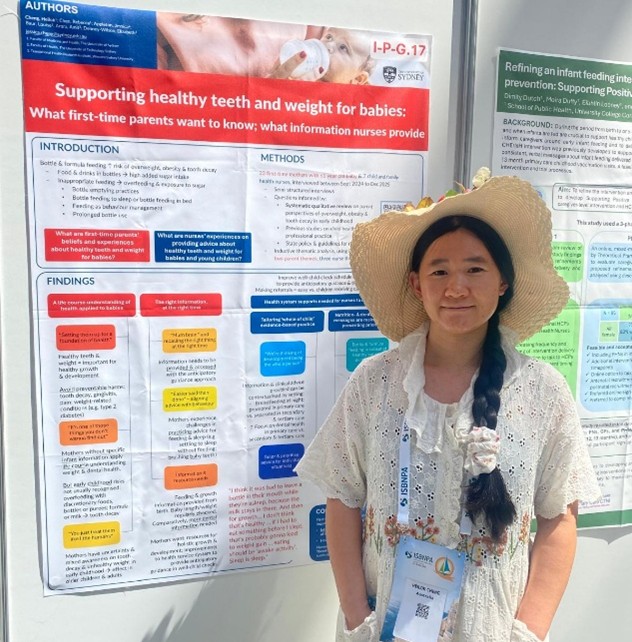
The work of EPOCH-Translate members and affiliates were on display throughout the conference. I attended with research from my PhD, focused on bottle and formula feeding as risk factors of overweight, obesity and tooth decay in early childhood. I presented a short oral presentation on early life predictors of early childhood caries from the Young Foods New Zealand study; and a poster presenting qualitative research on supporting healthy teeth and weight for infants, focused on the experiences of first-time parents and information provided by nurses.
Feeding practices linked to the use of bottles, formula and baby food pouches in early childhood supported discussions with ISBNPA attendees working in similar or overlapping research areas, including:
- Ms Rikke Rothegel Carlsson, who shared her PhD work on community health nurses’ acceptability of a new child sleep intervention, in the Bloom Study for healthy weight promotion in infants and toddlerhood; where Danish sleep guidelines do not currently exist (and how the Sleep, Baby and You program was adapted to meet study needs); and how feeding might be included in conversations on sleep and settling
- Dr Christina Alexandrou, on how the Health4Life app for infants and toddlers complemented the MINISTOP app for promoting nutrition and physical activity for preschoolers; where the Health4Life app needed to be trustworthy, flexible and non-rigid to support infant feeding and sleep; and how Health4Life included cultural adaptations in the same manner as MINISTOP
- Dr Jessica Large, on implementing weight screening and interventions in dental settings, and where and how discussions with families on appropriate bottle feeding, formula feeding and night-time breastfeeding could be supported by dental clinicians
- Associate Professor Beth Widen, on how coaching for responsive feeding in breastfeeding and bottle feeding can be undertaken remotely via video in the Mothers and CareGivers Investing in Children Program (MAGIC) program – and lead to improved caregiver sensitivity to children’s cues at ~1 year age!
- Ms Sanne Brouwers, who shared her PhD work in adapting the SuperFIT early childhood education and care program to infants and toddlers, including challenges from staff on addressing sleep and practicing responsive formula feeding in long day-care – and where extended bottle use might be occurring in ECEC settings
- Assistant Professor Ana Palacios, on working with underserved minority communities and why bottle or formula feeding might not be risk factors for tooth decay in Latine communities (and which other cariogenic risk factors could be more likely)
Across the four conference days, there was significant emphasis on the need for systems-level change, broadening international collaboration, and engaging with stakeholders. Drs Monica Wang and Michael Richardson led the pre-conference workshop I attended on storytelling for health; the science and structure of narratives to advance behavioural nutrition and physical activity change; and tailoring emotions and messages to different audiences. Professor Mark Tremblay presented the plenary on supporting physical activity, movement behaviours and healthy sleep across the life course, including the expansion of 24-hour movement guidelines for all age groups and the importance of global collaboration to understand how guidelines are being met or not met internationally. Researchers across the UK and USA in the APPETItE and Preschool Plates feeding practices study discussed how assorted studies could come together to create interventions that support protective feeding environments and flexible feeding practices. Dr Carmen Sánchez discussed the importance and significance of environmental nudges in digital and retail food settings to supporting healthier food choices in the UK. Researchers from the OBCT project, on obesity prevention in lower socioeconomic communities in Europe, shared co-created community-informed solutions designed in local municipalities – and CRE member, Dr Konsita Kuswara had a good question to ask about the reach of communication when focused on ‘obesity prevention’ compared to ‘healthy weight and growth’!
Take-home messages from these discussions emphasise the importance of different methods and strategies, and local to international approaches, of understanding practices and designing solutions.