
Introduction
This evidence brief aims to help you make the case for health promotion and obesity prevention in early childhood, with a special focus on considerations for priority populations in Australia to reduce inequity. EPOCH-Translate’s research on priority populations relates to communities living with social disadvantage, Aboriginal and Torres Strait Islander communities, and some culturally and linguistically diverse groups. In this brief, ‘priority populations’ refer to groups of children and families who are more affected by childhood obesity due to unfair differences in social, economic, environmental, structural, and cultural conditions.
Note: The term ‘culturally and linguistically diverse’ refers to population groups with different cultural backgrounds, languages, and traditions, distinct from Anglo-Australians or migrants from English-speaking countries. While many of the key learnings also apply to Aboriginal and Torres Strait Islander peoples, additional considerations are needed for this group and will be discussed separately from culturally and linguistically diverse groups.
Key Points
- There is a higher risk of childhood obesity in priority populations, including those from communities living with social disadvantage, Aboriginal and Torres Strait Islander communities, and some culturally and linguistically diverse groups.
- Universal programs alone may not meet the needs of priority populations. Tailored programs that consider diverse needs and contexts are required, informed by insights from parents and service providers.
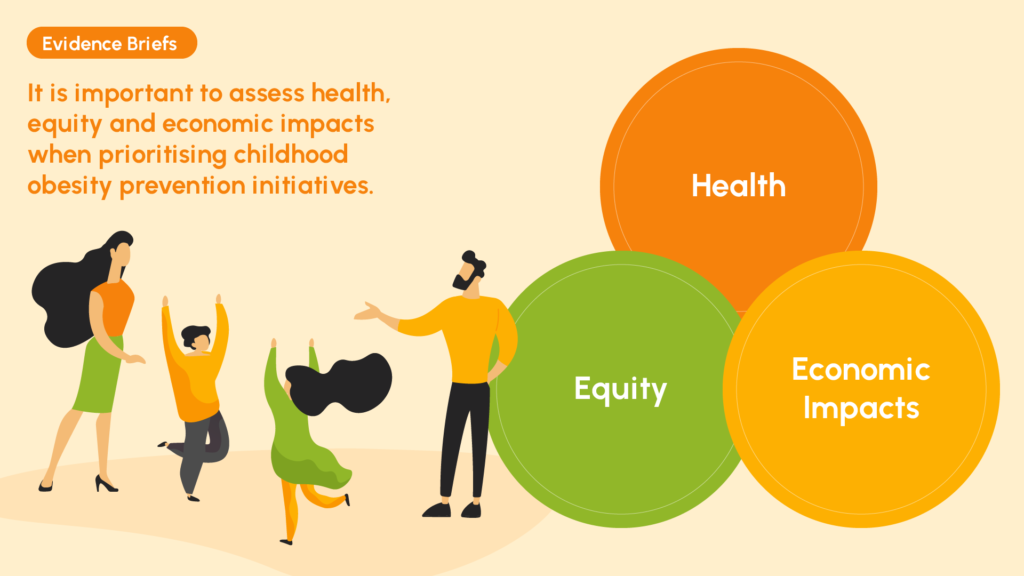
- It is important to assess health, equity and economic impacts when prioritising childhood obesity prevention initiatives.
- Building trust and bridging cultural and linguistic gaps are essential for effectively engaging priority populations and promoting equitable outcomes.
Some population groups are at greater risk of childhood obesity

Our research shows that children living with social disadvantage, children from Aboriginal and Torres Strait Islander communities, and those from some culturally and linguistically diverse backgrounds are disproportionately affected by overweight compared with the general population.
We have also identified the developmental periods in which children from certain priority populations are at greater risk. This can help pinpoint the best timing of interventions for different priority groups.
Evidence
Children living with social disadvantage
Investigating socioeconomic inequalities in BMI growth rates during childhood and adolescence
Using the Longitudinal Study of Australian Children, we identified that socioeconomic inequalities in BMI growth rates emerge most prominently in middle childhood (age 6-11). This period and early childhood may represent a critical window for targeted interventions to reduce disparities in childhood obesity.
Childhood obesity: why early and sustained prevention matters
Our research showed that children from socioeconomically disadvantaged backgrounds and children from some culturally and linguistically diverse backgrounds have a higher risk of being affected by overweight and are less likely to overcome it after early childhood compared to more advantaged populations.
Aboriginal and Torres Strait Islander children
Aboriginal and Torres Strait Islander children face a higher risk of overweight and obesity than the general population, with 47% affected at 9 years of age in this study. Rapid weight gain in infancy was a strong predictor of excess weight at 2 and 9 years, highlighting the importance of early intervention to promote healthy growth from infancy. Culturally relevant interventions developed with community are needed to support Aboriginal and Torres Strait Islander babies and their parents.
Our analyses of the 14-year Longitudinal Study of Australian Children showed that Aboriginal and Torres Strait Islander children had similar BMI z-scores to non-Aboriginal children with English-speaking parents in early childhood (age 2-5). However, higher BMI z-scores were apparent in Aboriginal and Torres Strait Islanders during middle childhood (age 6-11) and adolescence (age 12-17). This highlights the importance of supporting healthy behaviours throughout these later stages of development.
This analysis of Maternal and Child Health data in Victoria, Australia, found no difference in mean BMI z-scores between Aboriginal and Torres Strait Islander and non-Aboriginal children at 8 weeks of age. However, disparities in weight status emerge from 4 months age which were influenced by socioeconomic position and remoteness. These findings underscore the importance of accessible, culturally safe maternal and infant health care, particularly in disadvantaged areas and major cities where the majority of Aboriginal and Torres Strait Islander peoples live.
Most Aboriginal children in this study met the guidelines for fruit consumption, physical activity, screen time and sleep, and reported consuming take‐away foods less than once per week. Children meeting these guidelines had significantly higher health-related quality of life. These findings highlight the importance of culturally relevant and tailored health promotion programs, which may be more likely to contribute to higher health-related quality of life.
Culturally and linguistically diverse communities
We analysed data from the Longitudinal Study of Australian Children and found that, over early childhood (2-5 years), middle childhood (6-11 years) and adolescence (12-19 years), children from the Middle East and North Africa, the Americas and Oceania had higher body mass index (BMI) z-scores when compared to children from English-speaking countries. In contrast, children from East & South-East Asia and South & Central Asia had lower BMI z-scores. Across all ethnic groups (defined by the parent’s and child’s country of birth and language spoken at home) children from families living with greater social disadvantage were more likely to be affected by overweight compared to those from more advantaged families.
In a Victorian area with many Chinese immigrant families, we found different early growth patterns in children of Chinese-born mothers compared with those of Australian-born mothers. Children of Chinese-born mothers grew faster in the first few months (0.5-2 months), had higher BMI z-scores from 18 months, and lower BMI z-scores from 12-44 months. These findings demonstrate the need to better understand cultural differences in growth trajectories to inform tailored approaches that support healthy growth early in life.
Inequity in quality of life among culturally and linguistically diverse children in Australia
We investigated inequality in children’s health-related quality of life (HRQoL) in relation to their cultural and language background, using data from 9,099 children from the Longitudinal Study of Australian Children, with biannual follow-up from age 2/3 years to 16/17 years. We found lower quality of life among some cultural groups that developed primarily in middle childhood. Disparities in physical HRQoL were greater than in psychosocial HRQoL, and the groups most affected were children from Middle Eastern and North African, South Asian and East Asian households. This highlights the need for culturally tailored programs for school-aged children to improve their physical HRQoL.
A targeted approach is required to address the different needs and experiences of priority populations
While all young children benefit from strategies that promote healthy behaviours and prevent obesity, some face additional barriers that universal programs alone may not address. To avoid widening health inequalities, prevention efforts should prioritise these groups and provide tailored support, so approaches are relevant, culturally safe and responsive to the lived experiences of priority populations.
Evidence
Our analysis of the Healthy Beginnings trial found lower engagement, retention, and behavioural outcomes among participants who spoke a main language other than English at home, compared to those whose main language was English. This highlights the need to consider cultural relevance of early childhood obesity prevention interventions.
Since 2021, the INFANT program, delivered through a free app and group sessions, has been offered across Victoria. Our evaluation of the program’s reach at scale showed a strong overall uptake, with areas that had higher rates of practitioners trained to deliver the program achieving better program reach. However, key priority groups, individuals without university education, those living in more disadvantaged communities and speaking a language other than English at home were under-represented. Encouragingly, the proportion of Aboriginal and Torres Strait Islander families accessing the program appeared to be representative of the Victorian population.
We explored practitioners’ perceptions of reaching priority population groups when implementing universal preventive health programs, such as INFANT, at scale. We identified two key themes: universal health services do not fully meet the needs of priority populations, and, while varied approaches (such as building trust and tailoring programs to family needs) can enhance engagement, they are challenging to implement. Our findings highlight the complexities of reaching priority populations during scale-up and emphasise the importance of embedding and prioritising equity from the start.
We synthesised data from 31 global randomised trials (including 28,825 participants) evaluating parent-focused obesity prevention interventions commencing during pregnancy or the first year after birth. We found no evidence of an effect of interventions on BMI z-scores at 2 years of age, and no evidence that the effect differed according to individual characteristics representing priority populations, including household income, parent immigration status, education or employment status.
Priority populations in early childhood obesity prevention interventions: a scoping review
In our scoping review of 82 early childhood obesity prevention trials, we found that over half (57%) identified priority groups as those at higher risk of obesity. Priority groups were most commonly defined by social and economic disadvantage (49%), as well as young mothers, minority groups, culturally and linguistically diverse communities, Indigenous peoples, and families experiencing lower education, mental health problems, food insecurity, or poor access to health services. However, these groups were underrepresented in more than half of the included trials (56%), and few (17%) involved them in intervention design or developed tailored approaches. These findings highlight persistent gaps in reaching and engaging underserved populations in obesity prevention trials.
In this study, we explored the sources of information that culturally and linguistically diverse parents use and trust when it comes to child-health behaviours (such as nutrition, sleep, physical activity). Across all parents, health professionals, professional run websites, and government websites were most trusted; however, culturally and linguistically diverse parents were more likely to trust social media and to rely on general search engines (e.g. Google) than non-culturally and linguistically diverse parents. We suggest health promotion efforts need to align with parents’ cultural context and preference for trusted sources to improve early childhood health behaviours.
This qualitative study explored how Arabic- and Mongolian-speaking migrant mothers understand and practise responsive feeding. We found that while Arabic-speaking mothers more frequently adopted responsive feeding approaches (except when formula-feeding), Mongolian-speaking mothers were more likely to follow fixed schedules or pressure their children to finish meals often influenced by cultural beliefs such as favouring “chubby” babies. Both groups struggled to identify hunger and satiety cues and many used screen devices during meals as distractions. Findings highlight the need to co-design nutrition resources to account for cultural background, language needs, and parental literacy levels to promote healthier infant feeding patterns.
Culturally and linguistically diverse populations
This systematic review found that migrant parents’ key perceptions of the benefits of young children’s physical activity were better health outcomes and development. The key perceived benefits of sedentary behaviour were education, health and development. Migrant children experienced unique barriers to physical activity and reduced sedentary behaviour compared to the general child population, such as limited social networks. These findings show the need for future public health programs targeting physical activity and sedentary behaviour among migrant children to consider culture, context, and the unique experiences of migrant children when designing and implementing tailored interventions.
We surveyed 289 Chinese Australian mothers about their infant feeding practices and found that, by one month of age, the prevalence of infant formula introduction was twice as high as the national prevalence reported in the 2010 Australian National Infant Feeding Survey. Supporting exclusive breastfeeding in this group should involve addressing family support, cultural beliefs and practices around postnatal care, and enhancing mothers’ breastfeeding knowledge, intention, and confidence.
The infant feeding practices of Chinese immigrant mothers in Australia: a qualitative exploration
Chinese immigrant mothers were knowledgeable about optimal infant feeding but often lacked confidence to breastfeed exclusively. This was influenced by common perceptions of breast milk insufficiency, conflicting advice from grandparents, misinterpretation of healthy infant growth, and early return to work. Our findings point to the need for culturally responsive support that addresses differing beliefs about infant feeding and growth.
This study explored cultural, social, and maternal factors that influence infant feeding practices among Indian immigrant mothers living in Australia. Four themes were identified: 1) home country cultural beliefs and practices; 2) perceptions about baby’s growth and development; 3) external support such as family and friends, health care professionals, and antenatal classes; and 4) maternal factors such as acculturation experience, sources of information, attitudes toward and knowledge of infant feeding guidelines and health and work status. The findings highlight a need for culturally responsive health promotion and service support to improve engagement and alignment with infant feeding guidelines among Indian immigrant populations in Australia to ensure optimal long-term health of their children.
Using data from the Australian National Infant Feeding survey, this study found clear differences in infant feeding practices between Indian-born and Australian-born mothers in Australia. In particular, the early introduction of sweetened fluids among infants of Indian-born mothers was a key concern. This highlights an opportunity to provide targeted support to delay the introduction of sweetened fluids and promote healthy infant growth.
Breastfeeding and emerging motherhood identity
This study found that Chinese Australian mothers’ breastfeeding experiences were closely tied to their motherhood identity. Health professionals can enhance breastfeeding motivation and self-efficacy by understanding cultural and social influences and offering strategies such as peer support, strengthening family relationships, and helping mothers navigate differences in postnatal practices.
Interviews with Arabic and Chinese speaking migrant mothers in NSW found that family networks and bi-cultural doctors were trusted sources of infant feeding support. In contrast, maternal and child health services were less familiar and often perceived as lacking cultural sensitivity. These findings highlight opportunities to strengthen culturally responsive infant feeding support through bi-cultural health workforce and improve cultural competence within primary maternal and child health care.
Our study examined how Arabic and Mongolian speaking migrant mothers find and use child health information and services after moving to Australia. Mothers from both groups heavily relied on Google and other online platforms but differed in resource preferences. Key barriers included language difficulties, cost, limited awareness of available services, and negative experiences with healthcare professionals. Many mothers “cross-checked” information across multiple websites to judge trustworthiness. Health services and resources need to be culturally inclusive, linguistically accessible, and actively co-designed with migrant communities for equitable access and engagement to be achieved.
Aboriginal and Torres Strait Islander communities
Listening to Aboriginal mothers: perspectives on infant nutrition and active play promotion
This study explored the views, experiences, and preferences of Aboriginal mothers’ regarding access to information and support on infant nutrition and active play in Victoria, Australia. Five themes were identified: (i) information ahead of time, (ii) ‘how to’ interactive guidance, (iii) flexible access to professional support, (iv) informal sources of support, and (v) visual, concise, culturally responsive and accessible information. These findings underscore the need for timely, multi-faceted, and culturally responsive infant nutrition and active play health promotion resources for Aboriginal families in Victoria, as expressed by Aboriginal mothers and grandmothers.
Statewide mapping of Aboriginal maternal and infant health services in Victoria was undertaken in 2023. The study showed considerable variation in the availability of these services, with only 12 of 79 (15%) of local government areas offering Aboriginal specific services in both pregnancy and early childhood. These service gaps highlight the need for further investment in Aboriginal and Torres Strait Islander maternal and infant health services in Victoria.
Key factors influencing breastfeeding and infant feeding practices of Aboriginal and Torres Strait Islander women and their families included cultural practices, normalisation of bottle feeding, shame associated with breastfeeding in public, access to culturally safe nutrition education, support services and health professionals, family/partner support, knowledge of the benefits of breastfeeding, experiences with previous babies and concern that the baby was not getting enough milk. The perspectives of Aboriginal and Torres Strait Islander women need to be considered when providing breastfeeding and infant feeding advice.
Using data from the Study of Environment on Aboriginal Resilience and Child Health, this study found that the majority of children (aged 2-19 years) had a healthy weight (67%), while 17% had overweight and 16% had obesity. Factors associated with healthy weight in Aboriginal and Torres Strait Islander children included being younger, having a lower waist-to-height ratio, being more physically active, having a caregiver with a healthy BMI and having housing affordability problems. Implementing effective, community-led, culturally sensitive programs that support increased physical activity and promote healthy weight in childhood should be a public health priority.
Targeted child health behaviour and obesity prevention interventions for priority populations
Our research suggests that some strategies can help reduce, but not fully close, the gap in childhood obesity. Strategies that may be particularly beneficial for priority populations include supporting children in getting adequate sleep, leveraging social support to promote health messages, and using mobile apps to deliver evidence-based health information.
To improve equity, strategies must be tailored to the specific needs and contexts of the communities they aim to serve. This requires genuine co-design with these communities to ensure initiatives reflect their values, strengths, and priorities. Policies and programs should also address the broader social determinants of health such as living conditions, employment, and access to culturally sensitive services, to create the conditions that support lasting change.
Evidence
Supporting children from families living with socioeconomic disadvantage
We reviewed initiatives during pregnancy and up to 2 years of age aimed at preventing overweight/obesity and improving associated health behaviours in children from families experiencing socioeconomic disadvantage. The most effective interventions for improving energy balance-related behaviours or preventing overweight or obesity in the first 1,000 days began antenatally, continued for at least 2 years postnatally, addressed multiple behaviours, focused on first-time parents, and were delivered by multidisciplinary professional teams in partnership with peer groups. Delivery by lay agents showed promise for improving dietary behaviours in ethnic minority groups. A co-design approach was critical to ensuring interventions were inclusive and meaningful.
We examined whether the long-term impact of the INFANT program varied by maternal age and education. Some differences were observed, for example, children of mothers with higher education showed greater improvements in vegetable intake and reduced sweet snack consumption, while children of younger mothers showed greater improvements in water intake. However, there were no consistent patterns. Overall, the program was approximately equally effective across maternal age and education levels, which is important in community-based interventions.
The My Baby Now app offers evidence-based breastfeeding support throughout the perinatal period. Our study found that mothers without university education rated the app as more useful and impactful, especially for those with limited breastfeeding experience, suggesting it is especially beneficial among women with lower levels of education.
We evaluated the Healthy Beginnings program delivered through telephone and text messaging. Among low-income families only, the program was effective in reducing children’s mean BMI at age 3 years and the likelihood of eating in front of the television. Interviews with mothers indicated that the program improved awareness, confidence, and motivation to adopt healthy feeding practices, particularly among families from culturally diverse backgrounds.
Culturally responsive initiatives to involve culturally and linguistically diverse communities in early childhood health programs
Effective involvement with culturally and linguistically diverse communities is essential to ensure early childhood health programs are relevant, accessible, and meaningful. Involvement goes beyond language translation. It represents a genuine commitment to understanding and responding to families’ values, beliefs, and lived experiences.
Through our work adapting the Healthy Beginnings and INFANT programs for different cultural groups, we have gained valuable insights into how to build trust and connection with these families. The following section outlines our key learnings from this work, drawing on both published evidence and our practical experiences.
Culturally responsive, co-designed, and well-resourced programs are critical to involving culturally and linguistically diverse families in promoting healthy child growth. Sustained investment in community partnerships, bicultural workforce capacity, and inclusive program design is important to strengthen participation, equity, and outcomes.
Key learnings
Start early
Early involvement, ideally beginning in pregnancy, is important to strengthen participation among culturally diverse families.
Strengthen referral pathways
Trusted health professionals, particularly general practitioners and community culturally and linguistically diverse health workers, often serve as important connectors between families and early childhood or parenting services.
Build trust and co-design with communities to ensure cultural fit
Meaningful involvement was most effective when programs were co-designed with community members who could identify local needs and shape culturally relevant approaches. Partnerships with cultural organisations, leaders, and community groups provided valuable trust, credibility, and insights that strengthened program design and delivery.
Tailor delivery
Programs that adapted to community preferences achieved stronger engagement. Key enablers, such as accessible venues, flexible schedules, simple sign-up processes, and a mix of in-person and online delivery, helped make programs more accessible. Involving fathers and extended family, often key household decision-makers, helped strengthen mothers’ support networks, while bicultural workers bridged cultural and linguistic gaps.
Build capacity and organisational support
Successful involvement relied on a workforce with strong cultural awareness, supported by sustained organisational commitment. Adequate funding, time allocation, and leadership endorsement were essential for embedding equity and cultural responsiveness into routine service delivery. Integrating these principles into strategic plans and roles further strengthened long-term implementation.
Design inclusive communication
Clear, visually engaging program materials tested with communities were key to effective communication. In-language resources with culturally relevant images, even for English-proficient families, helped foster intergenerational understanding. Addressing varying literacy and digital access levels, and demonstrating practical “how-to” behaviours, made messages more actionable.
Strengthen the evidence
Collecting standardised data on ethnicity, language, and acculturation further strengthened understanding of diverse needs and equity impacts.
Evidence
Our systematic review examined the approaches and outcomes of culturally adapted early childhood obesity prevention interventions. The findings indicate that cultural adaptation improves acceptability among target groups, but effectiveness remains inconclusive. Ongoing collaboration with the target population during the adaptation process is essential for improving cultural relevance and engagement.
Our Healthy Beginnings program, delivered via telephone, was culturally adapted for Arabic- and Chinese-speaking mothers in Sydney, Australia. It achieved a high retention rate, with feedback indicating that mothers valued the personalised support from bicultural nurses, as well as the in-language and culturally relevant program resources
Resources translated into languages other than English
INFANT parent booklets and videos
INFANT parent booklets and videos were translated into Arabic, Hindi, Punjabi, Simplified Chinese, Urdu and Vietnamese as a first step in promoting uptake of health behaviours programs by families from priority populations. The resources support mothers, fathers and carers with evidence-based feeding and active play advice for infants less than 12 months of age. They are designed to complement the four INFANT sessions.
Healthy Beginnings parenting booklets
The Communicating Healthy Beginnings Advice by Telephone (CHAT) study delivered Healthy Beginnings program information via nurse-led telephone calls or text messages, supported by resource booklets that provided evidence-based guidance on infant feeding, active play, and screen time. These booklets were translated and culturally adapted for Arabic- and Chinese-speaking mothers to strengthen cultural relevance and inclusivity.
Cost effectiveness
Evaluating cost-effectiveness of obesity prevention in priority populations requires fit-for-purpose models that take into account different obesity risk and different potential savings in healthcare among different populations. We have developed bespoke models for high and low socioeconomic position, and for Aboriginal and Torres Strait Islander children. Broader modelling confirms that not all programs deliver equal benefits, highlighting the importance of assessing both economic and equity impacts to guide investment in interventions that improve child health and reduce inequalities.
Evidence
We developed a model of obesity development for children in high and low socio-economic groups (read our previous evidence brief) and used it to demonstrate that an infant sleep intervention was more cost-effective in children experiencing socioeconomic disadvantage than those from higher socioeconomic groups. Targeting this intervention to low and middle socioeconomic position (SEP) groups could be cost-effective.
We conducted a modelled economic evaluation of a telephone-based obesity prevention intervention among children from high and low socioeconomic groups. We found that the intervention was highly cost-effective in the low socioeconomic groups but only moderately cost-effective in the high socioeconomic groups. Prioritising families living with greater social disadvantage for this intervention could be an efficient use of resources and could reduce weight inequalities in childhood.
Using a distributional cost-effectiveness analysis approach, applied for the first time in childhood obesity prevention, we demonstrated how to assess the cost-effectiveness and impact on socioeconomic health inequalities of three programs. An infant sleep intervention and a clinician-led treatment for primary school-aged children with overweight and obesity were shown to be likely cost-effective and equity-promoting (67% and 100% probability, respectively), while the combined infant sleep, feeding, activity and breastfeeding program was not. This study demonstrates how economic and equity impact of childhood obesity prevention interventions can be evaluated. The findings can help policy makers prioritise interventions that deliver the greatest health benefits and promote equity.
We developed and validated a model that predicts overweight and obesity among Aboriginal and Torres Strait Islander children, from age 2 to age 17. This epidemiological model will form an integral component of a health economic model and fill a gap in the literature, as no other models have been developed specifically for Aboriginal and Torres Strait Islander children. The model will be used for cost-effectiveness analyses and to inform sustainable investment into programs improving the health of Aboriginal and Torres Strait Islander children.
 Get a copy of this page in PDF format