Highlights from a research visit to Little Rock, Arkansas
Dr Ioanna Katiforis, Postdoctoral Research Fellow at Deakin University and EPOCH-Translate Knowledge Translation Coordinator, reflects on her recent research visit to Little Rock, Arkansas.
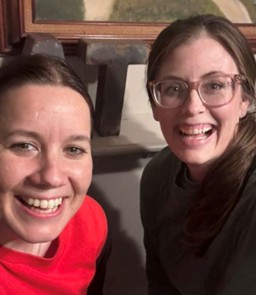
In March 2026, I had the opportunity to visit Associate Professor Taren Massey-Swindle at the University of Arkansas for Medical Sciences in Little Rock, Arkansas. Taren is an implementation scientist whose research focuses on understanding and improving health and developmental outcomes for children from low-income households. Arkansas is a southern U.S. state known for its scenic rural landscapes, agricultural economy, and close-knit communities. Little Rock is the state capital and largest city, with a population of approximately 200,000 in the city area.
While in Little Rock, I gained a deeper understanding of community-engaged research by observing Taren and her team’s work ‘in action’. I attended multiple sustainment visits for the Together, We Inspire Smart Eating (WISE) program. WISE is an educational intervention designed to increase fruit and vegetable consumption among children. The program is delivered in Arkansas Head Start centres, which are federally funded early childhood education centres supporting children from low-income families. These visits demonstrated the substantial effort invested in supporting ongoing implementation, including regular communication, program fidelity observations, and collaborative problem-solving with local staff to address potential barriers. The children were curious about my Australian accent and eager to show me the toys in the childcare centres, which added a fun element!
Taren and I also met with a coordinator from the Arkansas Cooperative Extension Service (ACES), a statewide service operating across all 75 Arkansas counties. With nearly half of the state consisting of farmland, ACES plays an important role in providing education and support to farms, households and businesses. Any member of the public can contact an ACES agent for advice and practical support on diverse topics such as gardening and home food production, small business development, environmental sustainability, nutrition, and parenting and family wellbeing.
Finally, Taren showed me around the university campus, and I joined a field visit with staff from the Arkansas Children’s Research Institute to the rural communities of Camden and Fordyce. We met with representatives from a local medical centre and a not-for-profit organisation that supports development projects empowering local youth experiencing social disadvantage. These meetings explored the feasibility of a new mutual learning program, in which researchers visit communities to engage with community members and gain a holistic understanding of local needs and resources, while community members gain insight into the researchers’ work and help to inform research priorities. This is particularly important as many researchers working in Arkansas are from out of state or overseas. A key takeaway for me was the importance of face-to-face connection in understanding the local context and working with resource-constrained communities by building on existing strengths rather than assuming deficits.
Of course, I enjoyed sampling Southern food traditions, including biscuits and gravy, chicken and waffles, and bread pudding with pecan. I managed to fit in a few local activities as well, including a submarine tour, a visit to the Arkansas History Museum and the Arkansas State Capitol building, and a walk along the Arkansas River Trail. My visit to Arkansas offered a new perspective on conducting research in real-world community settings in a U.S. context and a unique opportunity to experience the local culture. I am very grateful to EPOCH-Translate for supporting my visit!